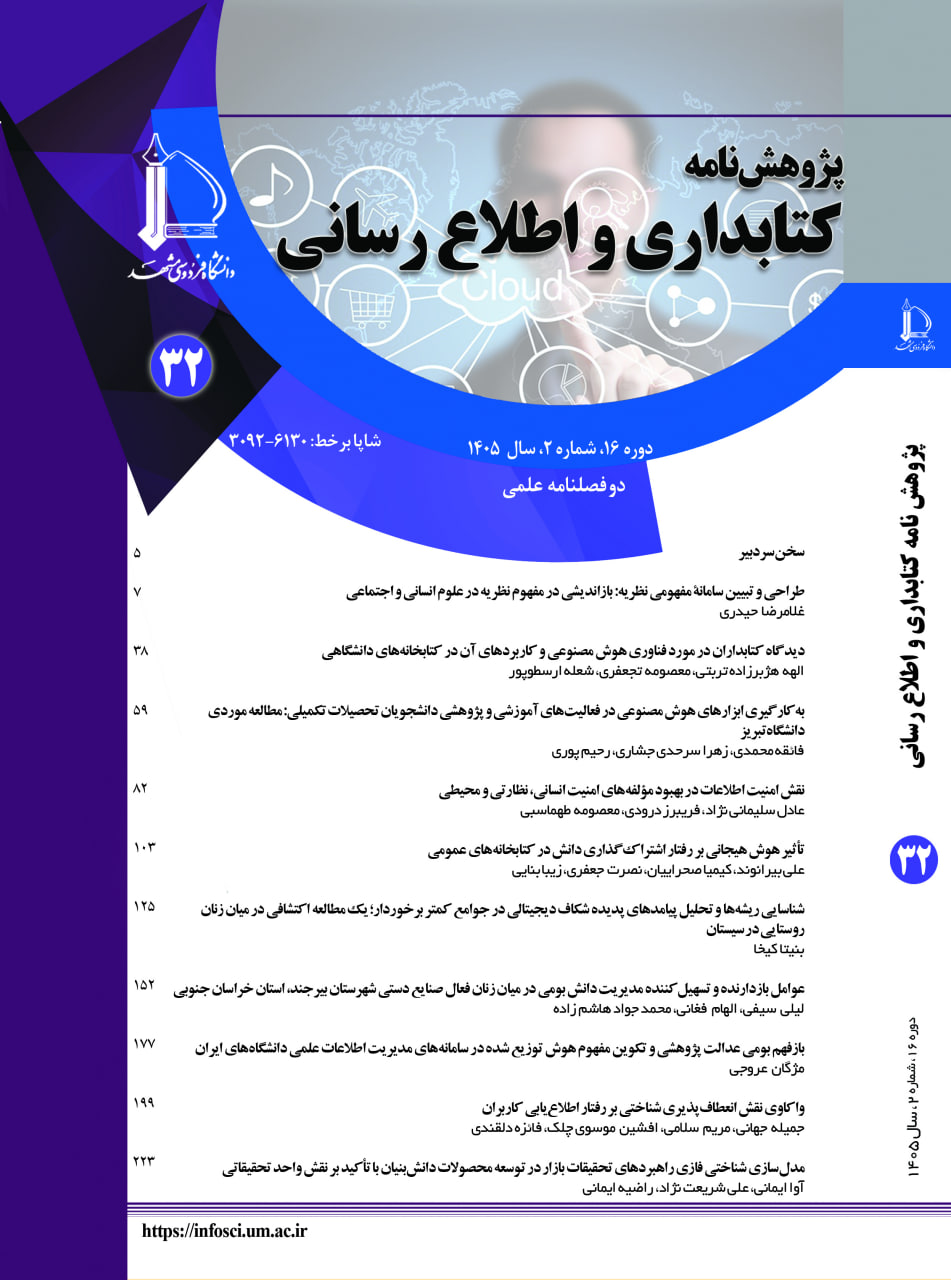
مقدمه و هدف: پژوهش حاضر با هدف توسعۀ سواد دیجیتالی زنان روستایی، به شناسایی ریشهها و تحلیل دلایل و پیامدهای شکاف دیجیتالی با تکیه بر نظریۀ «عدالت رالز» میپردازد. روشها: این پژوهشِ کیفی و توسعهای با رویکرد اکتشافی در دو فاز انجام شد: فاز اول شامل تحلیل محتوای کیفی نظریه عدالت رالز برای طراحی پرسشها، و فاز دوم شامل مصاحبه حضوری عمیق و نیمهساختاریافته با ۱۷ نفر از زنان روستانشین منطقه سیستان (انتخابشده با نمونهگیری هدفمند تا حد اشباع) بود. روایی ابزار با نظر متخصصان و پایایی آن با ضریب هولستی سنجیده شد. تحلیل دادهها با تلفیق تحلیل مضمون و الگوی کلایزی در نرمافزار MAXQDA صورت گرفت. یافتهها: تحلیل نظریه رالز به سه کد محوری (آزادیهای اساسی، اصل تفاوت و کالاهای اولیه) و آسیبشناسی شکاف دیجیتال به ۵ محور (میزان دسترسی، موانع فرهنگی، آموزش شغلی، مشکلات زیرساختی و نقش بخش خصوصی) انجامید. نتایج نشان داد شکاف دیجیتالی پدیدهای ساختاری است که در سه سطح خرد (نابرابری جنسیتی)، میانی (محرومیتهای منطقهای) و کلان (سیاستگذاریهای ناکارآمد) ریشه دارد. بحث و نتیجهگیری: کاهش شکاف دیجیتالی مستلزم گذار از نگاه صرفاً فنی به رویکردی یکپارچه و چندسطحی است. تحقق عدالت دیجیتالی نیازمند توانمندسازی زنان، توسعۀ زیرساختهای ارتباطی، آموزش سواد دیجیتالی انتقادی و مشارکت فعال زنان در فرایند سیاستگذاری است. اصالت: این مقاله با تحلیل جامع موانع فنی، آموزشی و فرهنگی-جنسیتی در مناطق کمبرخوردار، راهبردهای عملی مبتنی بر توانمندسازی، توسعه زیرساختی و برنامههای آموزشی ارائه میدهد که میتواند راهنمای تصمیمسازان در کاهش شکاف دیجیتالی زنان روستایی باشد.
Abbasikasbi, H. (2021). "Ontology of digital divide in Iran and strategies for overcoming it; a study of villages of Qom province". Media and Culture, 11(1), 195-212.[In Persian].
Bernard, H. R. & Ryan, G. W. (2003). Analyzing qualitative data: Systematic approaches. Sage Publications.
Britannica (2025). Digital divide. Encyclopædia Britannica.
Chen, L. L., Guo, Z. & Liang, Q. (2026). "Gender differences in digital literacy: A systematic and meta-analytic review across developmental stages and socio-cultural contexts''. Frontiers in Psychology, 17. DOI:10.3389/fpsyg.2026.1673694
Colaizzi, P. F. (1978). Psychological research as the phenomenologist views it. Existential-phenomenological alternatives for psychology. R. S. Valle and M. King, Oxford University Press: 48-71.
Directorate-General for Employment, S. A. and Inclusion (2024). PROFEA programme evaluation report. European Commission.
Embroker, T. (2025). "Top 16 cybersecurity threats in 2025."
Farahani, H. & Mozaffari QarahBolagh, S. (2024). "Evaluation of the effects of information and communication technology on the empowerment of rural women: A case study of Kaghazkonan District, East Azarbaijan Province". Rural Development, 27(106), 73-85.[In Persian].
Faraji Sabokbar, H., Nemati, M. & Khaki, A. (2012). "Reviewing the mechanism of information technology on rural women's empowerment based on model DEA (case study: the village of Gharn Abad) ". Woman in Development & Politics, 10(1), 125-138.[In Persian].
Holsti, O. R. (1969). Content analysis for the social sciences and humanities. Addison-Wesley.
Hosami, A. & Jokela, T. (2018). "Gendered digital divides: Cultural norms and access to ICT in rural communities". International Journal of Gender and Technology, 7(1), 23-41.
Hosami, B. (2019). Digital gender divide and empowering women in the digital age: A critical approach in Iranian society.
Kaletski-Maisel, G. & Jowallah, R. (2025). Empowering Citizens: Preparing for the Future of Digital Literacy and AI in Education. Digital Citizenship and the Future of AI Engagement, Ethics, and Privacy, IGI Global Scientific Publishing: 33-150.
Keykha, B. (2014). Investigating the status of new information and communication technologies and their role in empowering rural women in the Sistan region. Proceedings of the National Conference on Women and Sustainable Rural Development, Ferdowsi University of Mashhad.[In Persian].
Mohammadi, A., Panahi Kazerouni, M. Reihani, M., Jamileh, S. M. & Asadollahzadeh, A. (2025). "The transformation of learning in the digital age and its impact on girls' education." Women's Interdisciplinary Research, 7(1), 73-85.[In Persian].
Molaei Hashjin, N., Moradi, M. & Mohammadi, M. (2011). "The role of the offices of information and communication technology (ICT) in the rural sustainable development of Meshkinshahr Township." Human Geography Research Quarterly, 44(4), 147-168.DOI:10.22059/jhgr.2013.29389 [In Persian].
Muringa, T. P. & Shava, E. (2025). "Digital empowerment of women in the South African public sector". Frontiers in Sociology, 10, 1-10.DOI:10.3389/fsoc.2025.1604857
Omidvar, N. & Tavakoli, M. (2023). "Analysis of the rural digital literacy policy in Iran". Journal of Research and Rural Planning, 12(1), 95-109.[In Persian].
Pascoe, J. (1998). Adding generic contextual capabilities to wearable computers. Digest of Papers. Second International Symposium on Wearable Computers, IEEE.
Picard, R. W. (2013). Affective computing, MIT Press.
Rawls, J. (1971). A theory of justice. Harvard University Press.
Short, J. C., Broberg, J. C., Cogliser, C. C. & Brigham, K. H. (2010). "Construct validation using computer-aided text analysis (CATA)." Organizational Research Methods, 13(2), 320-347.
Shakeel, K., Hanif, S. & Shah, S. A. A. (2026). "Empowering women through digital literacy: A study of Islamabad women's colleges." Journal of Development and Social Sciences, 7(3), 164-174.DOI: https://doi.org/10.47205/jdss.2026(7-III)14
Showkat, M., Mabrouk, F., Nagina, R., & Gautam, S. (2025). "Exploring the influence of digital life on women's social engagement: The role of digital literacy". Journal of Scientific & Industrial Research, 84(9), 1014-1025.DOI:10.56042/jsir.v84i9.16394
Streubert Speziale, H. & Carpenter, D. R. (2011). Qualitative research in nursing: Advancing the humanistic imperative. Lippincott Williams & Wilkins.
Sumsub (2025). Addressing the digital divide: The global challenge of digital exclusion and policy pathways for economic equality [White paper], Sumsub.
Tabatabaeeamid, B., Shahraki. M. & Ahmadpour, A. (2026). "Indigenous narratives of rural women on the impacts of digital literacy on empowerment and local economy (A study in Oghan Region, Golestan Province)". Social Business, 3(2), 67-88. DOI:10.22059/jsbu.2026.407137.1084. [In Persian].
UNESCO (2023). Global Education Monitoring Report: Technology in Education. UNESCO Publishing Paris.
Van Dijk, J. (2020). The digital divide. Polity Press.
World, B. (2021). World development report 2021: Data for better lives. World Bank.
Zarrabi, A., Alizadeh J., Rahimi, A. & Babanasab, R. (2014). "Spatial analysis and prioritization of cities of West Azerbaijan for information and communication technology development and digital divide reduction." Geographical Research Quarterly, 29(2), 15-38. URL: http://georesearch.ir/article-1-395-fa.html. [In Persian].
کیخا، بنیتا. (1405). شناسایی ریشهها و تحلیل پیامدهای پدیده شکاف دیجیتالی در جوامع کمتر برخوردار؛ یک مطالعه اکتشافی در میان زنان روستایی در سیستان. پژوهشنامه کتابداری و اطلاع رسانی، 16(2)، 125–151. https://doi.org/10.22067/infosci.2026.97130.1266
MLA
کیخا، بنیتا. "شناسایی ریشهها و تحلیل پیامدهای پدیده شکاف دیجیتالی در جوامع کمتر برخوردار؛ یک مطالعه اکتشافی در میان زنان روستایی در سیستان"، پژوهشنامه کتابداری و اطلاع رسانی، 16، 2، 1405، 125–151. doi: 10.22067/infosci.2026.97130.1266
HARVARD
کیخا، بنیتا. (1405). 'شناسایی ریشهها و تحلیل پیامدهای پدیده شکاف دیجیتالی در جوامع کمتر برخوردار؛ یک مطالعه اکتشافی در میان زنان روستایی در سیستان'، پژوهشنامه کتابداری و اطلاع رسانی، 16(2), pp. 125–151. doi: 10.22067/infosci.2026.97130.1266
CHICAGO
کیخا، بنیتا، "شناسایی ریشهها و تحلیل پیامدهای پدیده شکاف دیجیتالی در جوامع کمتر برخوردار؛ یک مطالعه اکتشافی در میان زنان روستایی در سیستان." پژوهشنامه کتابداری و اطلاع رسانی، 16 2 (1405): 125–151, doi: 10.22067/infosci.2026.97130.1266
VANCOUVER
کیخا بنیتا. شناسایی ریشهها و تحلیل پیامدهای پدیده شکاف دیجیتالی در جوامع کمتر برخوردار؛ یک مطالعه اکتشافی در میان زنان روستایی در سیستان. پژوهشنامه کتابداری و اطلاع رسانی. 1405;16(2):125–151. doi: 10.22067/infosci.2026.97130.1266